Operating environment / Electronics
Precision begins with presentation.
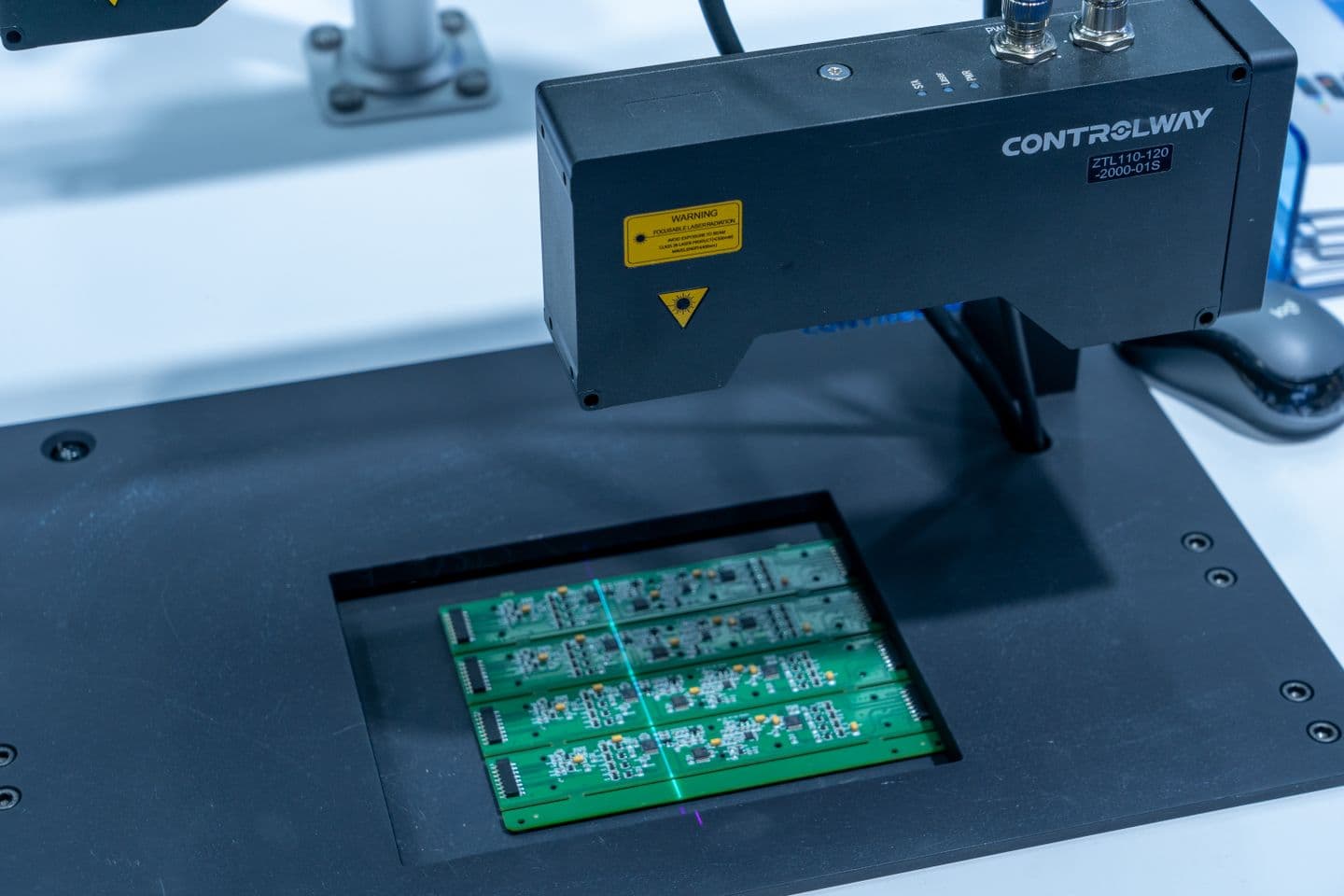
Small assemblies and delicate components need controlled handling and consistent imaging before an inspection decision can be trusted.
01 / Production route
The handover
is a decision.
Conceptual sequence for this environment. Each transfer depends on an agreed machine or product state.
- 01
Locate the assembly
Support and identify
- 02
Inspect the features
Illuminate and acquire
- 03
Record and route
Accept, reject or review
Hold / Recover
An invalid image is not a pass. Hold the assembly for another acquisition or review, preserving identity and the original result.
02 / Engineering in context
Design for the
operating conditions.
- Surface variation
- Verify detection on representative finishes and component tolerances.
- Handling environment
- Review cleanliness and electrostatic controls with the site where applicable.
- Rework routing
- Preserve inspection history when an assembly returns for another check.
03 / Connected scope
The engineering
behind the route.
- Machine Vision
Optics, lighting and image analysis matched to the part and its production environment.
- Automated Inspection
Repeatable measurement and defect detection, with results linked to each component.
- Controls & Software
Clear machine sequences, operator interfaces and production-data connections.
Illustrative project / Concept case study
Astra Precision Vision Line
Controlled illumination and inspection for small-format electronic assemblies.
KERN is a concept for an industrial automation company. These examples describe engineering considerations, not certified installations or sector credentials.
Discuss your operating conditions
Start with your line.
Part variation, access, existing equipment and acceptance criteria. These are the starting points for the engineering scope.
Discuss a project