Engineering scope
The disciplines.
One production system.
Mechanics, robotics, vision, control and data only deliver when their interfaces work together. Explore the engineering behind that connection.
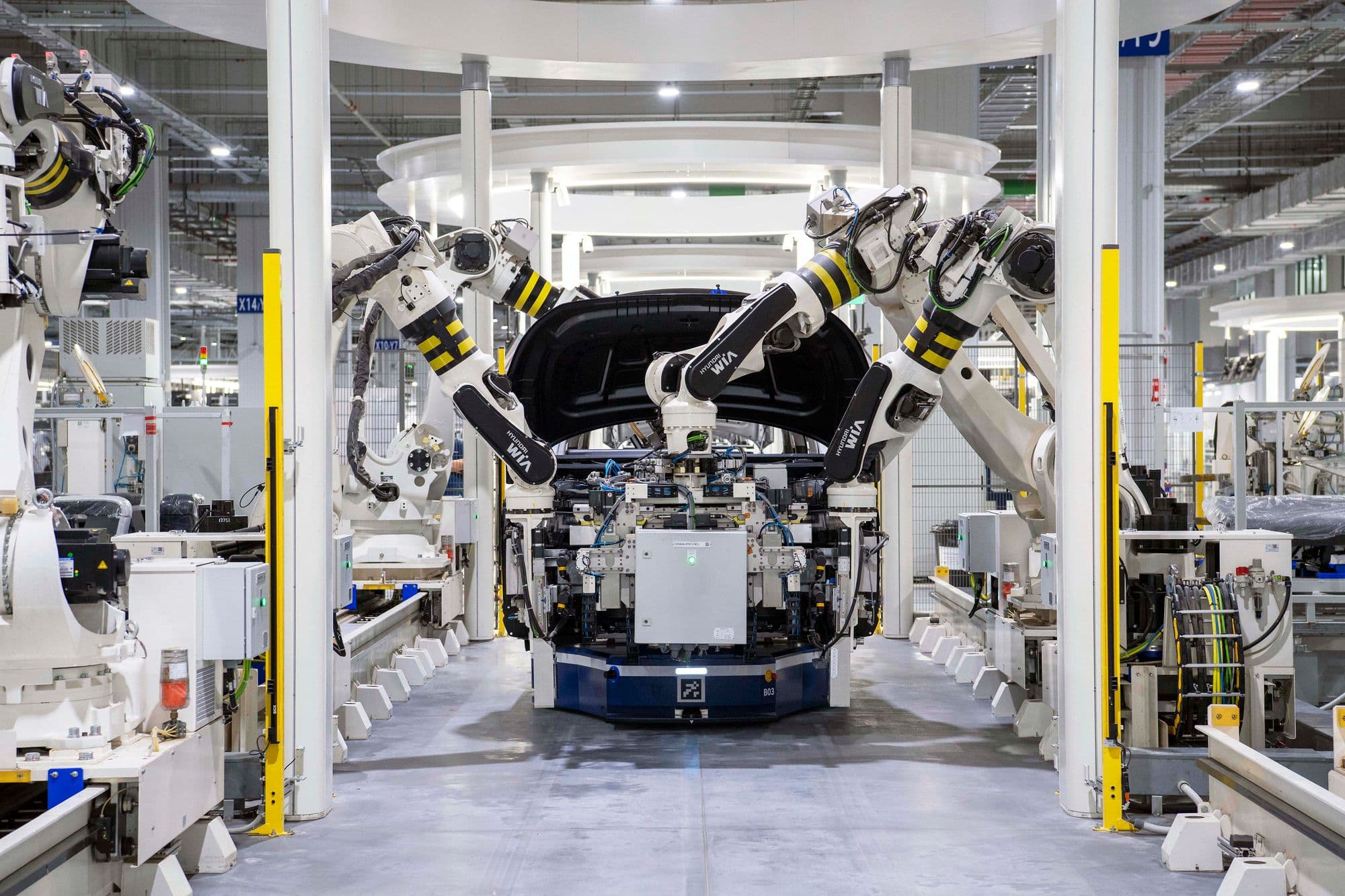
Production, understood.
Start with the constraint.
Connect the disciplines.
A handling problem can also be a vision problem. An inspection result needs a control response. Each capability is developed with the surrounding system in view.
01 / Capabilities
Eight disciplines.
A connected scope.
- 01
Robotic Systems
Coordinated robot cells, tooling and safety architecture, designed around takt time and access.
System role
Coordinated motion between the part, tooling and surrounding equipment.
- 02
Machine Vision
Optics, lighting and image analysis matched to the part and its production environment.
System role
A consistent visual reference for guidance, identification and inspection.
- 03
Automated Inspection
Repeatable measurement and defect detection, with results linked to each component.
System role
Evidence that connects product quality to the production record.
- 04
Material Handling
Reliable part movement, orientation and buffering between production operations.
System role
Reliable movement and presentation between production operations.
- 05
Production Integration
New equipment connected to existing lines, interfaces and operating procedures.
System role
The interfaces that make individual machines operate as one line.
- 06
Simulation & Digital Engineering
Reach, collision and cycle-time studies before equipment reaches the factory floor.
System role
A shared engineering model before physical installation.
- 07
Controls & Software
Clear machine sequences, operator interfaces and production-data connections.
System role
The operating logic between machines, people and production data.
- 08
Lifecycle Support
Service access, diagnostics and planned improvements built into the system.
System role
Continuity between commissioning, daily operation and planned improvement.
02 / Define the scope
The interface is
part of the work.
Part variation, takt time, existing controls and access for maintenance determine the solution. Review them together before committing to equipment.
Conceptual interface / Existing line + integrated cell
Three connections. One operating sequence.
- Mechanical transfer
- Upstream equipment presents a located part. The KERN cell handles and processes it, then releases it to downstream equipment.
- Control handshake
- Readiness, cycle completion and fault states pass in both directions. Transfer only proceeds when both machines agree.
- Production record
- Part identity enters the cell. Inspection results leave with that identity and continue into the production record.
- Verification and recovery
- A failed check holds the part. The cell and upstream equipment return to an agreed safe state before another transfer.
Connections shown are conceptual. Signals, acceptance criteria and recovery states are agreed for the installed equipment.
Start with the production constraint
What needs to work better?
Bring the part, the operating conditions and the outcome you need. The engineering scope follows from there.
Discuss a project