Automotive / Concept case study
Nordwerk Line 04
An existing component line needed robotic loading and inline inspection without expanding the cell or separating quality decisions from production records.
Automotive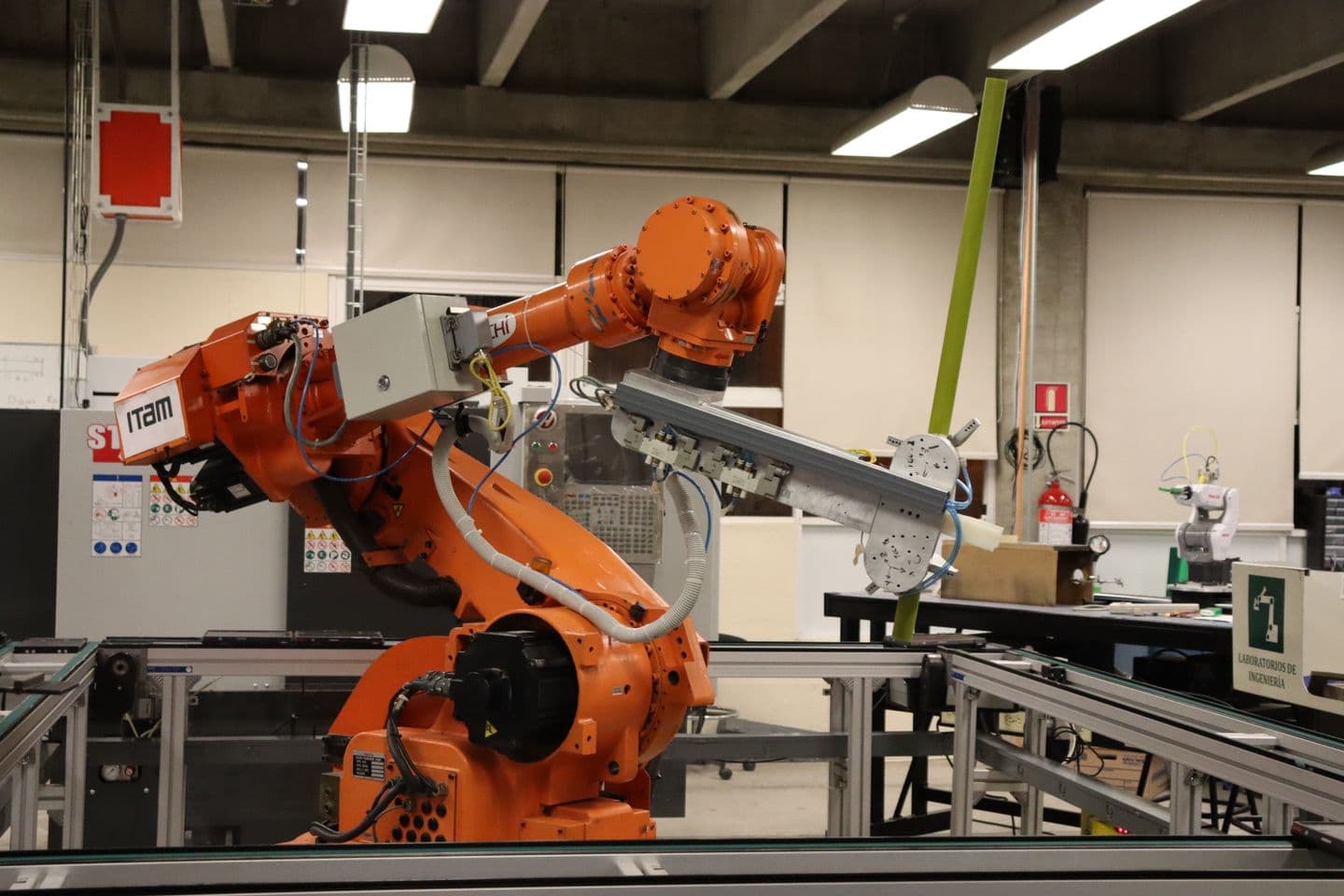
01 / The brief
More output. Same footprint.
Manual transfer and offline checks interrupted the flow between operations. The proposed cell had to raise output inside the existing envelope and retain the line’s PLC and traceability interfaces.
02 / Engineering response
Coordinate the cell, not just the robot.
- 01
Handling
Use a defined loading position and coordinated robot sequence to move the component between operations.
- 02
Inspection
Trigger the image at a repeatable part position, with acceptance criteria agreed before commissioning.
- 03
Integration
Return the component identity and result to the existing line; only release when downstream equipment is ready.
03 / The system
The connections
make the sequence.
Conceptual system / Nordwerk Line 04
Physical flow, coordinated states, recorded decisions.
- Present partLocated + identified
- Robot transferCoordinated handling
- Vision checkResult tied to part
- Line handoverReady + accepted
Unresolved state / Hold and recover
An unresolved identity or failed check holds the component for review rather than releasing it into the accepted flow.
From study to acceptance.
Cell study
Confirm part presentation, available space and existing interfaces.
Sequence proof
Review normal cycles, rejects and recovery against the acceptance criteria.
Line acceptance
Verify machine handovers and the production record during the planned installation window.
04 / Illustrative result
A connected cell. A different baseline.
Throughput
Illustrative output per hour against the manual-cell baseline.
Manual handling
Illustrative reduction in handling operations per component.
System availability
Illustrative scheduled-production availability, excluding planned maintenance.
- Output and handling comparisons use an illustrative manual-cell baseline.
- Availability refers to scheduled production and excludes planned maintenance.
- These figures illustrate the case-study concept; they are not measured customer results.
Next case study / Food & Packaging
Valen Foods P12Bring us the
production challenge.
Start with the part, the constraint and what needs to change.
Discuss a project